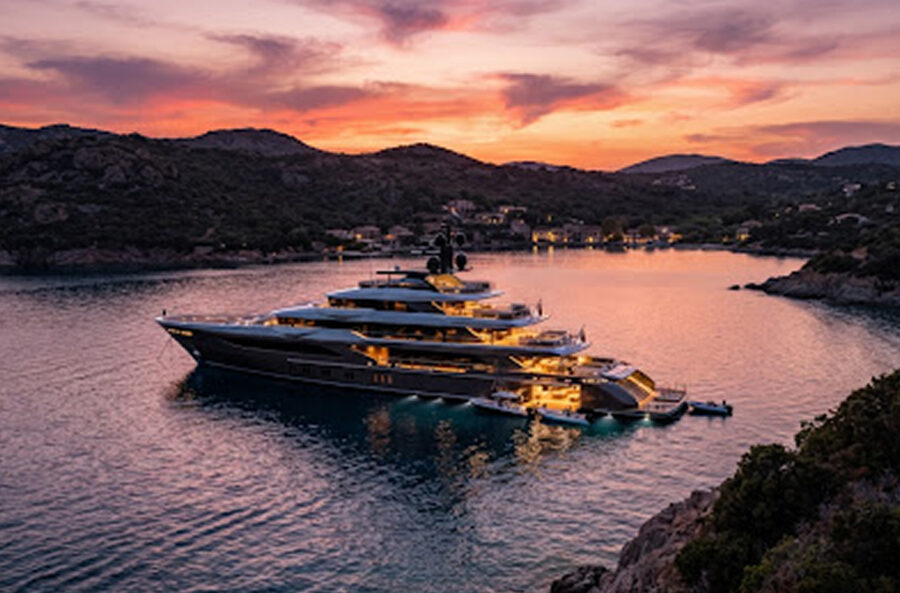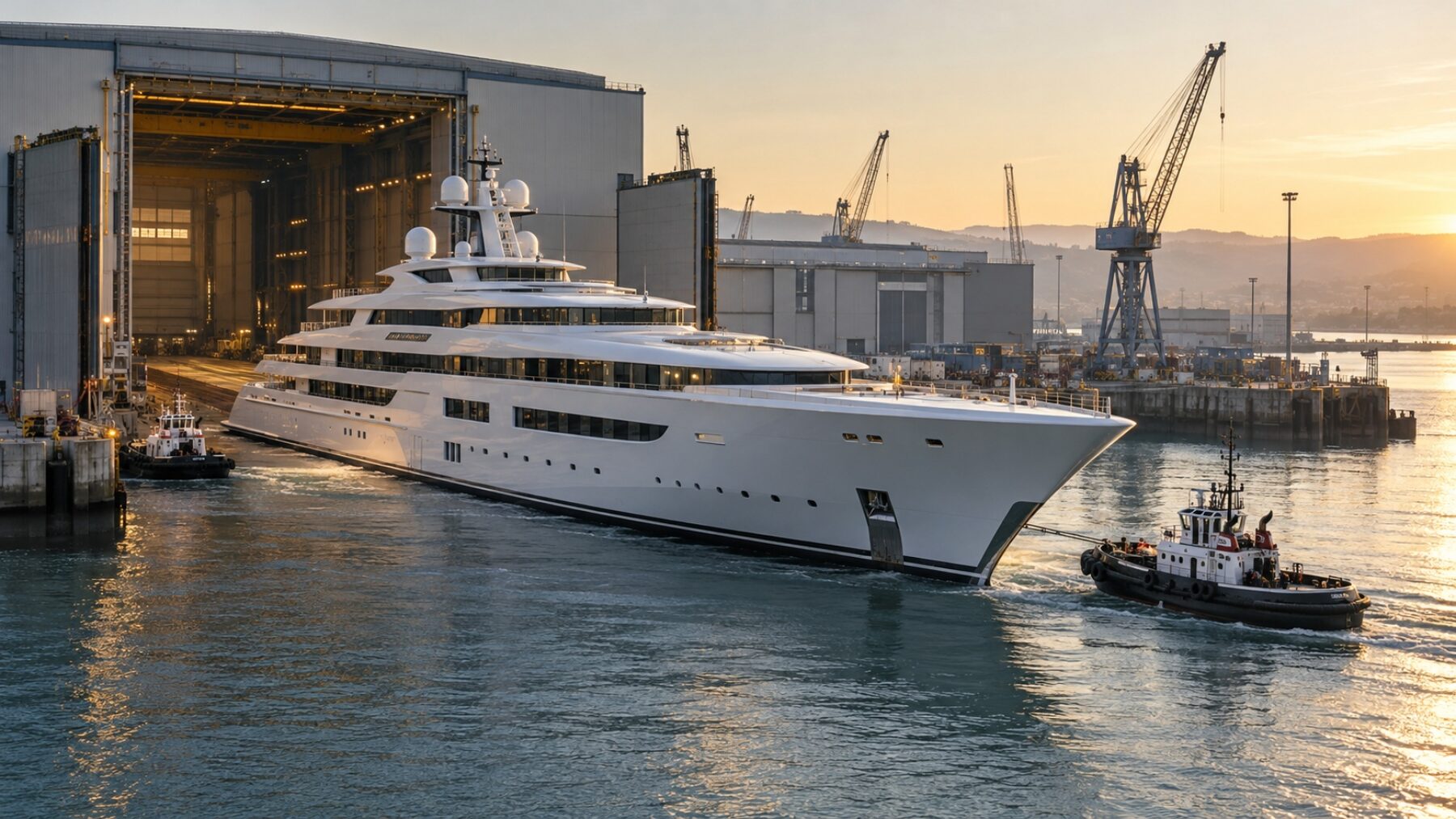
Custom yacht construction means creating a vessel around its owner: how you cruise, who you host and the life you want at sea. From choosing the shipyard and naval architect to the final sea trials, a new build calls for expertise and foresight. At ABYACHT, we guide owners from their first ideas to delivery, backed by more than 20 years of collaboration with a European network of yachting professionals.
Why Build a Yacht Instead of Buying One?
Buying a new yacht off the shelf or a pre-owned one usually gets you on the water sooner. Building, on the other hand, answers a different ambition: a yacht designed around your own uses and standards.
Depending on the project, you can define the exterior lines, the deck plan, the cabin layout, the crew areas and the interior design. You also choose the propulsion, the range, the navigation and communication systems, as well as tenders and water toys. Materials, wood species, fabrics and finishes complete the picture, together with acoustic comfort, guest flow and entertaining spaces.
The options then depend on the shipyard and the platform you select, whether you want a motor yacht, a sailing yacht, a catamaran or a superyacht:
- A custom yacht is developed from a blank sheet of paper, around your brief.
- A semi-custom yacht starts from an existing platform or range, with a degree of personalisation that varies by builder.
There is a practical advantage too. A well-specified new build lets you think about resale value from day one, since size, gross tonnage, equipment and layout all influence how easily you can sell your yacht later.
The 7 Stages of a Custom Yacht Build
1. Define Your Cruising Programme and Budget
Every project starts with one essential question: what yacht do you want, and how will you use it? Mediterranean cruising, family holidays, charter, offshore passages or long-range voyages each lead to a different design.
First, you decide on the type of vessel, its length, its range, the number of cabins and the crew quarters. Then, draught, cruising speed and range must match the destinations you have in mind. The flag (private or commercial, French, British or other) and the yacht’s future home port also deserve attention at this stage.
As for the budget, it should separate the build cost from project fees, and then anticipate operating costs: options, insurance, maintenance, crew and berth. This first phase lays the foundations of your technical specification.
2. Choose the Shipyard and Naval Architect
Choosing the shipyard is one of the biggest decisions in any custom yacht construction project. Each builder has its own expertise, style and specialities: motor yachts, superyachts, large sailing yachts, displacement or semi-displacement hulls, steel, aluminium or composite construction.
Among the leading international names, you will find Italian yards such as Benetti, Sanlorenzo, CRN, Custom Line, Baglietto, Rossinavi and Cantiere delle Marche. The Netherlands is home to Feadship, Heesen, Oceanco and Damen Yachting, while Germany’s Lürssen is known for very large yachts. For sailing yachts, Perini Navi, Royal Huisman, Baltic Yachts, Nautor Swan and Southern Wind are well-established names. Depending on the builder, the offer may be fully custom, semi-custom or a personalised series model.
However, reputation alone should not drive your choice. A yacht broker helps you identify the yard that fits your cruising programme, your budget, the yacht’s size and the level of customisation you want.
Meanwhile, the naval architect handles the fundamentals: hull lines, stability, displacement, structure, performance and the integration of technical systems. Exterior and interior designers then work on the lines, volumes and aesthetic identity of the yacht. In short, a successful custom yacht relies on close coordination between owner, broker, naval architect, designers and shipyard.
ABYACHT works with renowned Italian, German, Spanish and Dutch shipyards, as well as French, Italian, Spanish, Dutch and German naval architects. The builders listed above illustrate the market and do not imply a partnership with ABYACHT.
3. Draft the Technical Specification and Contract
The technical specification describes the yacht in precise detail: dimensions, propulsion, technical systems, equipment, materials, expected performance, layout and finishes.
The build contract, for its part, sets out the price, schedule, payment milestones, change orders, warranties and the conditions for acceptance and delivery. Speed, range and comfort targets must be defined together with the conditions under which they will be measured.
Working with a yachting professional makes it easier to compare offers and coordinate the project. Legal matters and specialist technical surveys should be handled by qualified lawyers and experts.
4. Design the Exterior and Interior Layout
Exterior profile, superstructure, decks, beach club, cockpit, flybridge, owner’s suite, guest cabins, saloon, galley and crew quarters: every space is designed around life on board and the type of yacht.
You choose the materials, wood species, fabrics, furniture, lighting and equipment. Yet ergonomics, guest privacy and crew circulation matter just as much as aesthetics.
Each choice must also respect weight, stability, structural and maintenance constraints. This is how your yacht gains a distinctive identity, balancing elegance and function.
5. Supervise the Build
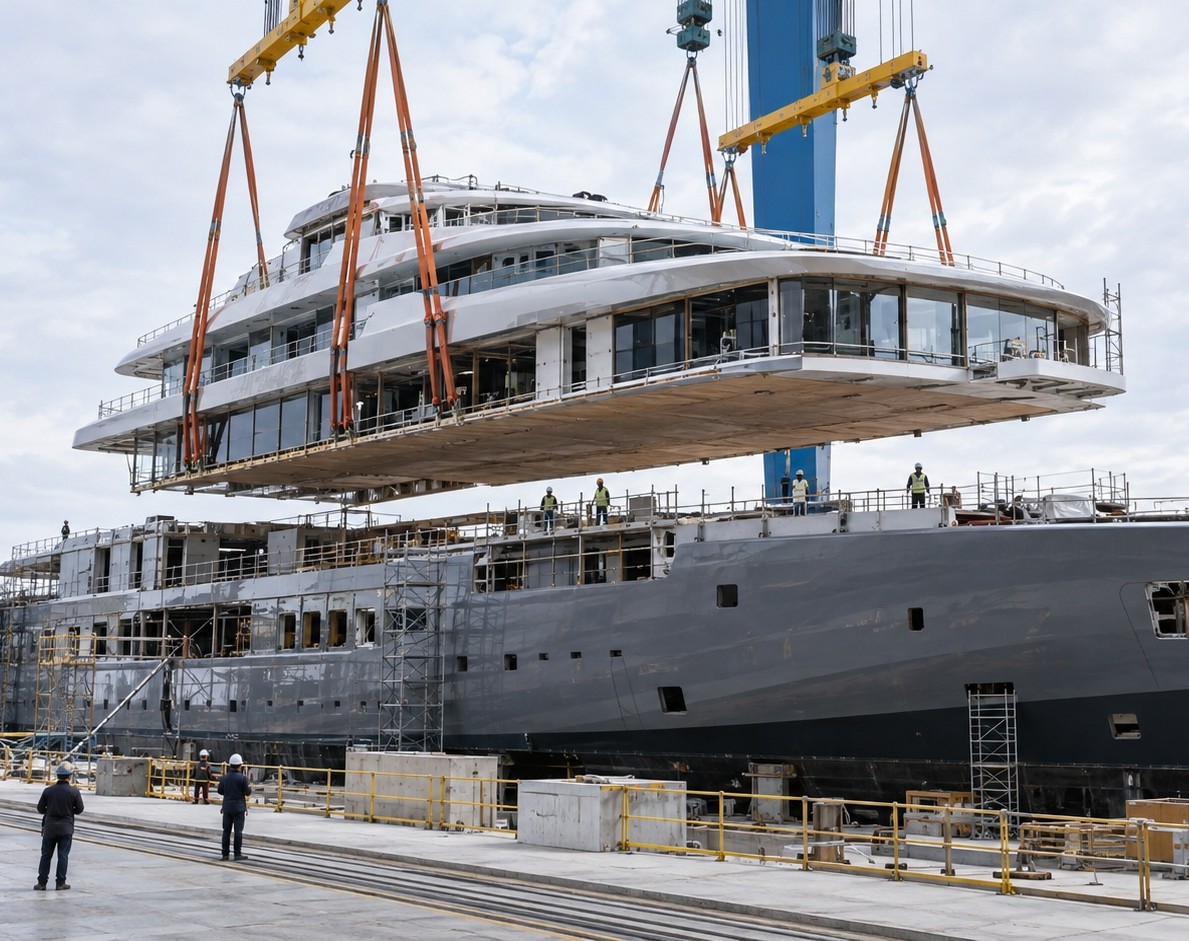
Once construction begins, regular oversight becomes essential. The main phases include building the hull and superstructure, installing propulsion and technical systems, electrical work, plumbing, insulation, joinery, interior fit-out and finishing.
Site visits and progress meetings let you check build quality, the schedule and compliance with the contract specification. Any changes requested during the build should be documented, together with their impact on cost and timing.
New build project management relies on a team sized to the project’s complexity: owner’s representative, project manager, technical experts and, where relevant, the future captain. Each person’s role should be clear from the outset.
6. Sea Trials, Inspections and Delivery
Before delivery, the yacht enters a decisive phase: the sea trials. They verify propulsion, performance, fuel consumption, manoeuvrability, navigation systems and the yacht’s overall behaviour, following the agreed protocol.
Systems are tested both alongside and at sea. Any defects are recorded on a snagging list and then resolved under the contractual acceptance terms.
Finally, handover comes with the technical documentation, applicable certificates, warranties and operating guidelines. Familiarising the crew with the equipment makes the first voyages smoother.
7. After Delivery: Operation and Maintenance
Delivery opens a new chapter: living on board and cruising in the best conditions. A yacht needs ongoing care, including preventive maintenance, warranty follow-up, technical management, berthing and winter storage.
Over the years, a yacht refit can modernise equipment or update the interior. That is why after-sales service and the availability of technical teams should be assessed as early as the shipyard selection.
How Much Does It Cost to Build a Yacht?
There is no single price for custom yacht construction. The budget depends on the yacht’s length and volume, its architecture, the chosen shipyard, the propulsion, the materials and the level of customisation.
A semi-custom yacht built on an existing platform and a fully custom yacht follow different budget logics. System complexity, finishes and range requirements also weigh on the overall envelope.
A preliminary study helps set a realistic budget and identify the yards able to meet it. It should spell out what each offer includes, the additional fees and a contingency for changes along the way.
Above all, look beyond the purchase price. The real cost of yacht ownership includes crew, berthing, routine and annual maintenance, engines, generators and every system that keeps life on board comfortable. Relying too heavily on charter income to cover these costs is a common pitfall: returns can be limited, and peak-season charters reduce the weeks you can enjoy the yacht yourself.
How Long Does It Take to Build a Yacht?
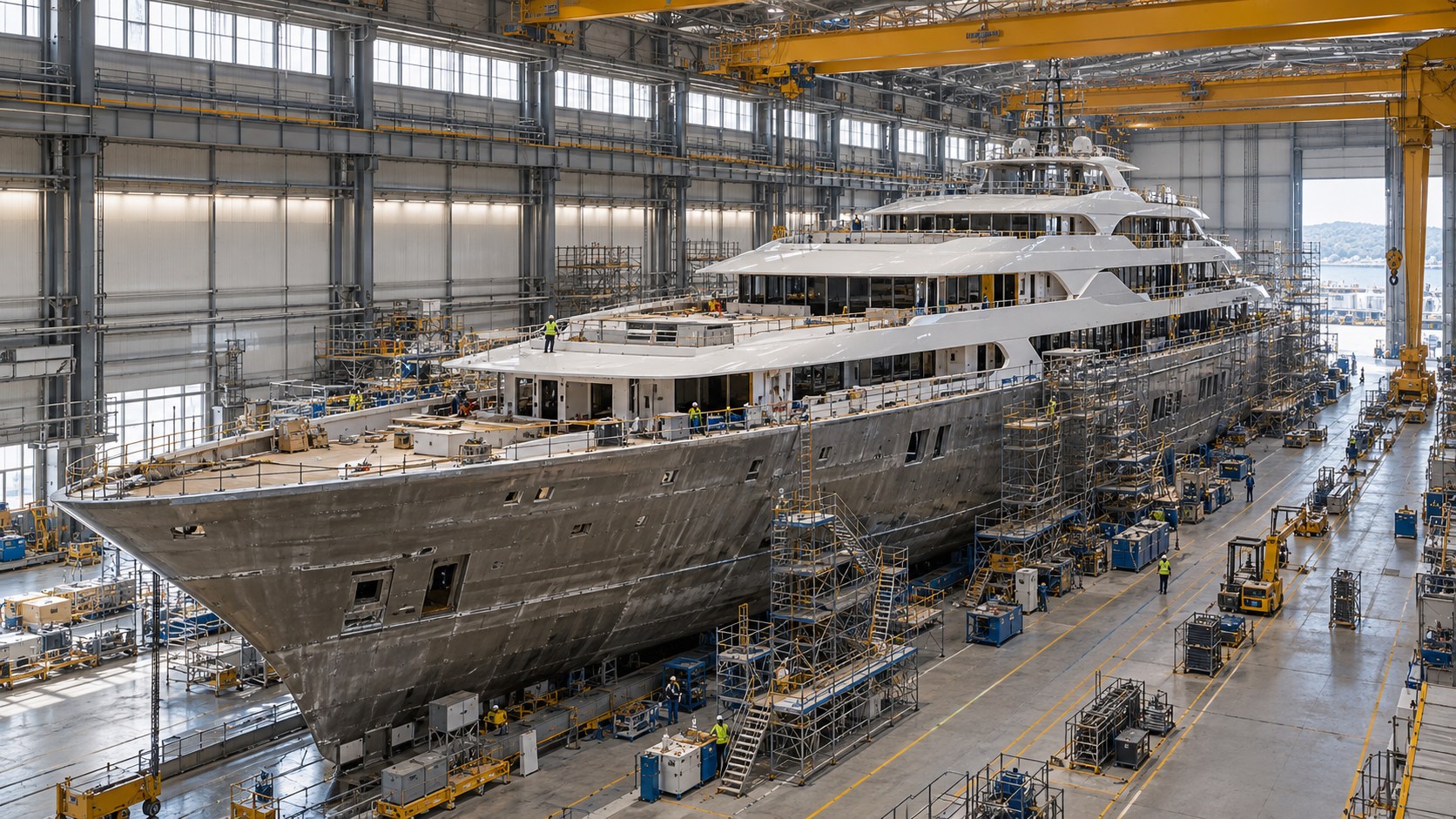
Building a yacht can take anywhere from several months to several years. The timeline depends on the yacht’s size, its complexity and the shipyard’s order book.
Design studies, naval architecture, engineering, construction, finishing and sea trials all follow a schedule specific to each project. Naturally, a yacht based on an existing platform and a large, fully custom superyacht do not move at the same pace. Only a schedule agreed with the shipyard gives you a realistic delivery date.
The availability of a build slot, meaning a construction window at the yard, can also shape the calendar. Making decisions early and approving specifications on time is the best way to keep the build on track.
Why Work With a Yacht Broker on a New Build?
Building a yacht means dealing with the shipyard, naval architects, designers, engineers and suppliers. A yacht broker helps you define your needs, select the right partners and compare proposals on a clear basis.
Depending on the agreed mandate, the broker can also support negotiations and coordinate the key milestones through to delivery. This role works alongside the technical experts, the project manager and legal advisers.
The mistakes we help owners avoid
A good broker is there to make sure the yacht truly fits the owner and their family. In practice, that means steering clear of:
- a yacht too complex for the owner’s experience;
- operating costs far higher than expected;
- a design that does not match the intended use or the family’s wishes;
- a poorly anticipated flag choice;
- underestimating the importance of the right crew.
At ABYACHT, we support clients in buying, selling and building yachts, with custom projects from 40 to 200 metres. Every project begins by listening carefully to the future owner’s expectations and cruising programme. Learn more about ABYACHT and our European network.
Custom Yacht Construction: Your Questions Answered
How much does it cost to build a custom yacht?
The price depends on length, volume, shipyard, materials, propulsion, equipment and the level of customisation. A preliminary study sets a suitable budget and lets you compare offers on a clear basis.
How long does it take to build a yacht?
Design and construction can take from several months to several years. The timeline depends on the type of yacht, the project’s complexity and the shipyard’s availability.
What is the difference between a custom and a semi-custom yacht?
A custom yacht is developed specifically around the owner’s technical specification. A semi-custom yacht is based on an existing platform or range, with customisation options that vary by builder.
Can I fully personalise my yacht?
A custom build gives you great freedom over design, layout, equipment and finishes. That freedom works within the limits of naval architecture, safety and, where applicable, classification rules.
Do I need a yacht broker to build a yacht?
No, it is not mandatory. However, an experienced yacht broker can help you select partners, compare proposals and represent your interests under the agreed mandate.
Ready to Start Your New Build Project?
Are you thinking of building a custom yacht, whether a sailing yacht, a catamaran, a motor yacht or a superyacht? ABYACHT supports you from your very first ideas: defining the project, finding the right shipyard, comparing solutions and coordinating every stage through to delivery.
Contact ABYACHT to discuss your yacht project in complete confidence.